Modern Leg Prostheses

Support for Your Mobility

What are leg prostheses?

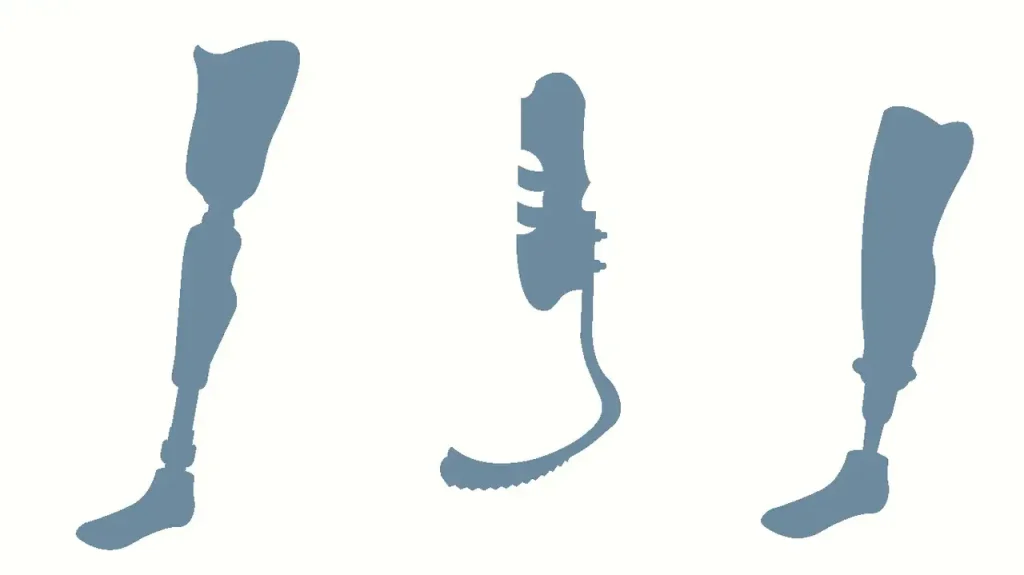
For most people, walking, standing, or sitting are natural, everyday processes. After an amputation in the leg area, assistive devices are required to continue performing these movements. The task of leg prostheses is to compensate for lost body functions and to reduce the associated restrictions as much as possible.

A modern prosthesis is made up of various components, so-called functional parts. These include, for example, prosthetic feet or knee joints, which can be controlled mechanically or electronically (microprocessor-controlled). The targeted combination of these components results in the finished fitting, which can help you achieve greater independence in everyday life.

© Ottobock

Which is the right prosthesis for me?

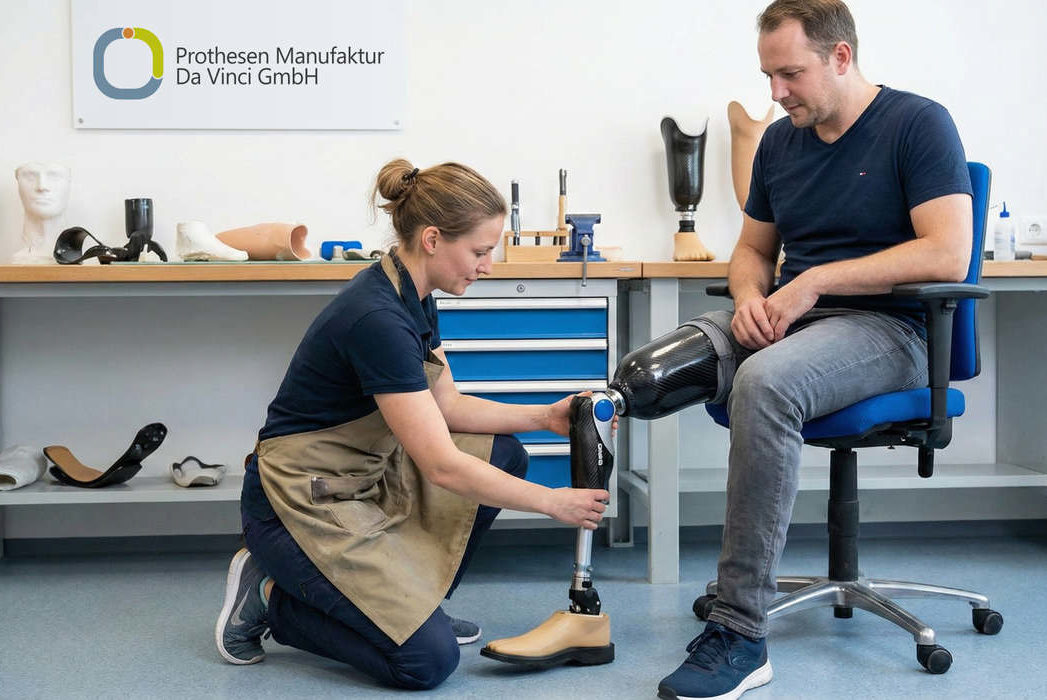
The requirements for a prosthetic fitting are as individual as the person themselves. There is no single solution that fits everyone. At Prothesen-Manufaktur-Da Vinci GmbH, we therefore work with you to develop a treatment concept tailored to your specific situation.

Factors such as the intended use (everyday life, work, sports), the amputated limb, your age, and your physical condition are included in this planning. However, your personal wishes and goals for the future are also decisive. This results in a fitting that meets your needs in the best possible way.

© Ottobock

Copyright by Össur®

The Components of a Leg Prosthesis

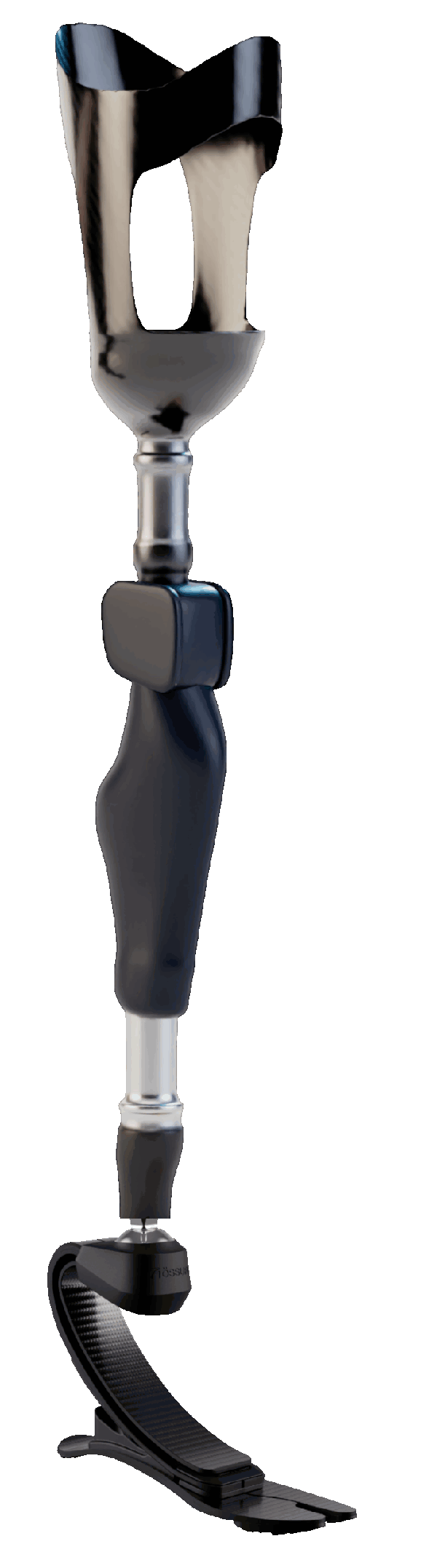
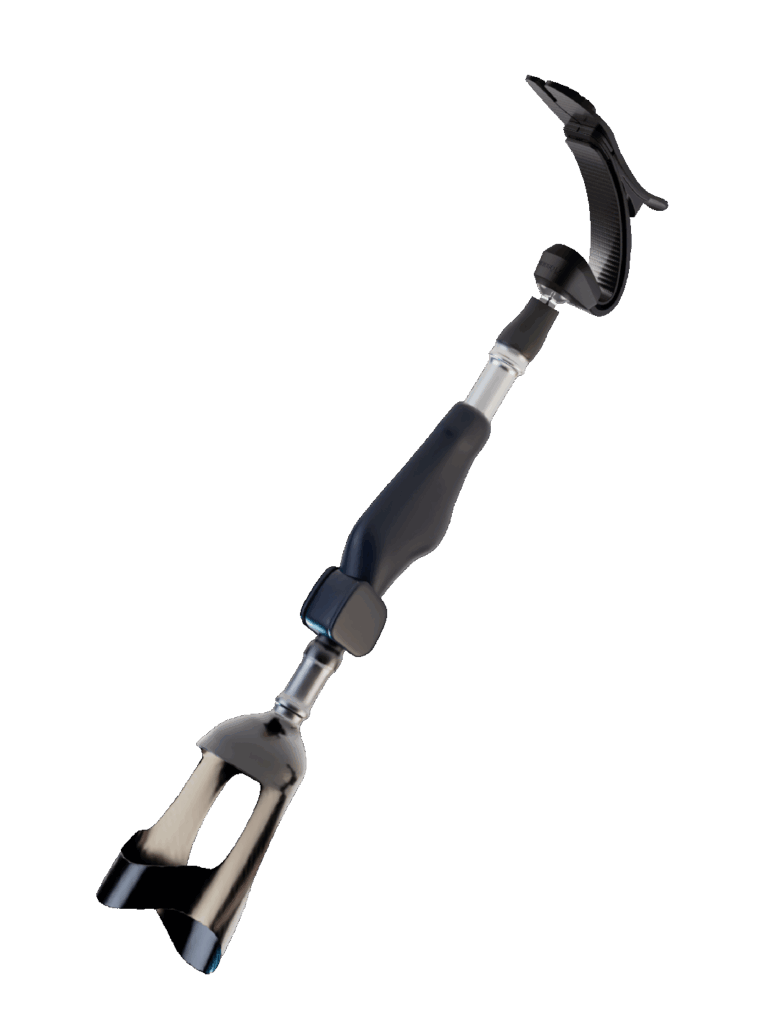
Leg prostheses consist of several components, which can be roughly divided into three areas:

The Socket

This is the crucial interface and the connecting element between the amputated limb (residual limb) and the prosthesis.

Functional Components

These components take over the function of lost joints, such as the bending and straightening of a knee joint or the mobility of an ankle joint.

Connecting Elements / Adapters

They establish the connection between the socket and the functional components. They serve not only for adaptation but also for setting the correct length and static alignment, and can enable additional functions, such as a rotational movement.

Foot Part

As an essential building block of the prosthesis, it replaces the human foot and masters the complex tasks of standing and walking in everyday life. Since the demands on this component are very diverse, there are a wide variety of designs to ensure an individual fitting.

The Amputation Level

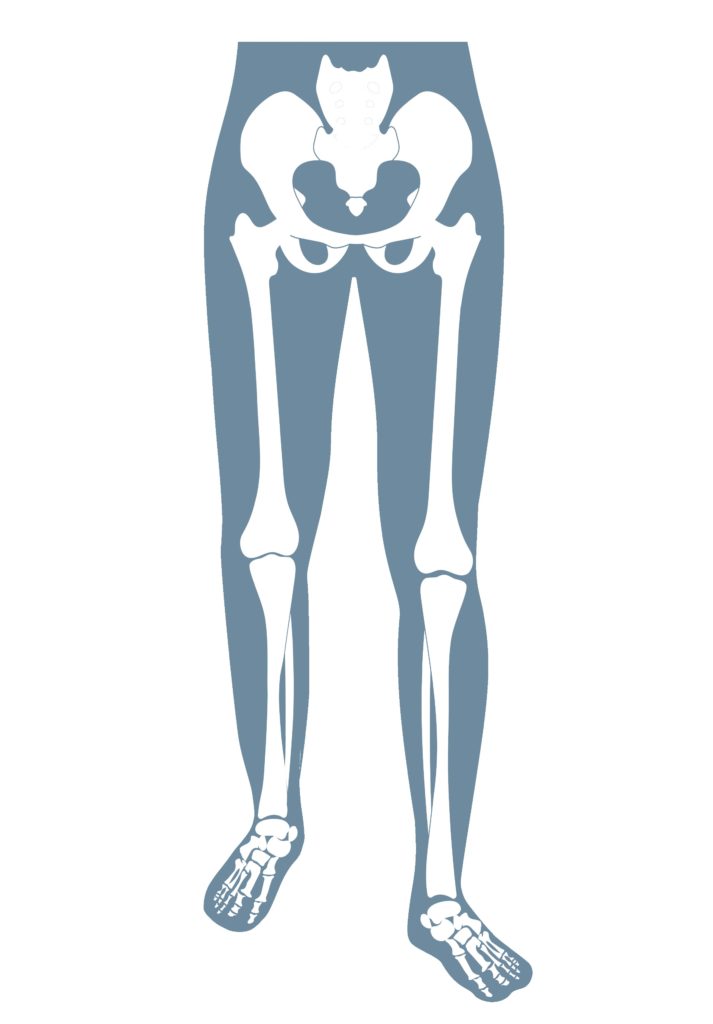
The height of the amputation is a decisive factor in selecting the necessary prosthetic components. The following overview shows common types of amputation and the resulting prosthetic structure.
HIP DISARTICULATION

Type of Amputation:

Hip disarticulation, Hemipelvectomy, Hemicorporectomy

Description:

In hip disarticulation, the entire leg is removed at the hip joint. If parts of the pelvis are also removed, this is called a hemipelvectomy. Hemicorporectomy refers to the removal of the entire pelvis. The prosthesis is controlled by movements in the hip or pelvic area.

Required Components:

Prosthetic socket (pelvic basket), hip joint, knee component, foot component, connecting elements, adapters.

Type of Amputation:

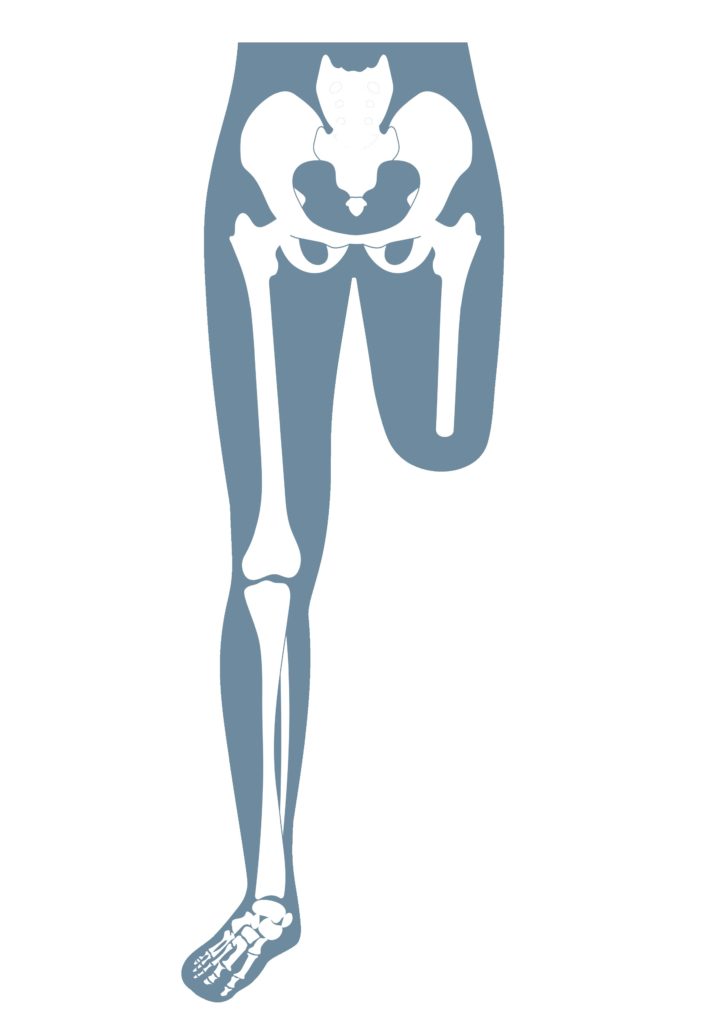
Thigh amputation / Transfemoral amputation

Description:

Here, the thigh bone (femur) is severed. Depending on the remaining bone length, a distinction is made between long, medium, and short residual limbs. The remaining thigh controls the movement of the prosthesis.

Required Components:

Prosthetic socket, knee component, foot component, connecting elements, adapters.

Type of Amputation:

Knee disarticulation

Description:

In this form, the leg is separated at the knee joint, meaning the thigh bone remains completely intact (sometimes with, sometimes without the kneecap). The thigh controls the prosthesis. An advantage is often that the end of the stump can bear weight.

Required Components:

Prosthetic socket, knee component, foot component, connecting elements, adapters.

Type of Amputation:

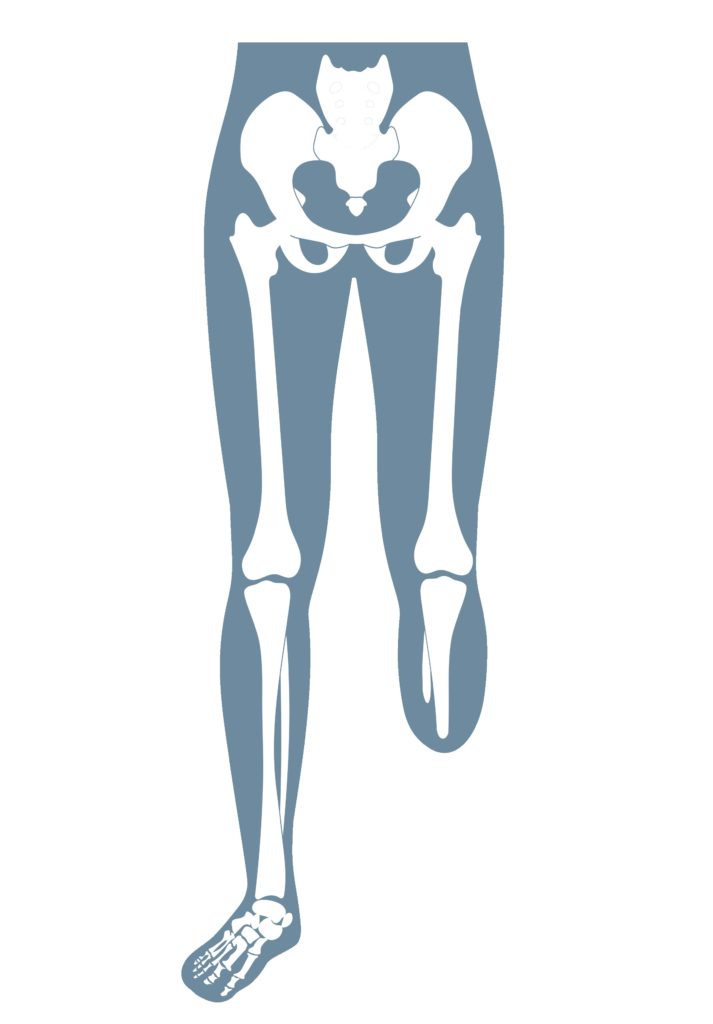
Lower leg amputation / Transtibial amputation

Description:

In this amputation, the shin and fibula (tibia and fibula) are severed. The remaining length of the bones determines the classification into long, medium, or short residual limbs. In some cases, a bone bridge is created between the tibia and fibula. The prosthesis is controlled via the remaining lower leg.

Required Components:

Prosthetic socket, foot component, connecting elements, adapters, (optional joint side bars).

Type of Amputation:

Forefoot, midfoot, or hindfoot amputations

Description:

Numerous amputation lines exist in the foot area, ranging from the removal of individual toes to the amputation of the entire foot (e.g., Syme amputation). Depending on the amputation height, different prosthetic fittings are used, ranging from silicone replacement feet to adapted insoles or more complex prostheses made of fiber composites (carbon, fiberglass).

Required Components:

(Depending on type) Silicone prostheses, foot plate, lower leg shell, prosthetic socket.

Special Forms

Type of Amputation:

Rotationplasty (according to Borggreve)

Description:

In this rare operation, the knee joint is removed. The foot, part of the lower leg, and the ankle joint are rotated 180 degrees and attached to the thigh bone. The ankle joint (now pointing backward) functionally takes over the role of the knee joint. This method is often used for bone tumors in the knee area.

Required Components:

Thigh corset/sleeve, socket for the foot, joint side bars, adapters, foot component.

Type of Amputation:

Congenital malformation (Dysmelia)

Description:

Dysmelia refers to a congenital malformation of limbs. A length deficit in the affected leg can be compensated for by a prosthetic fitting. Depending on the severity of the malformation, both orthotic (supporting, correcting) and prosthetic (replacing, compensating) components are used.

Required Components:

Knee component, foot component, joint side bars, adapters, orthotic shells/sockets.

Types of Leg Prostheses

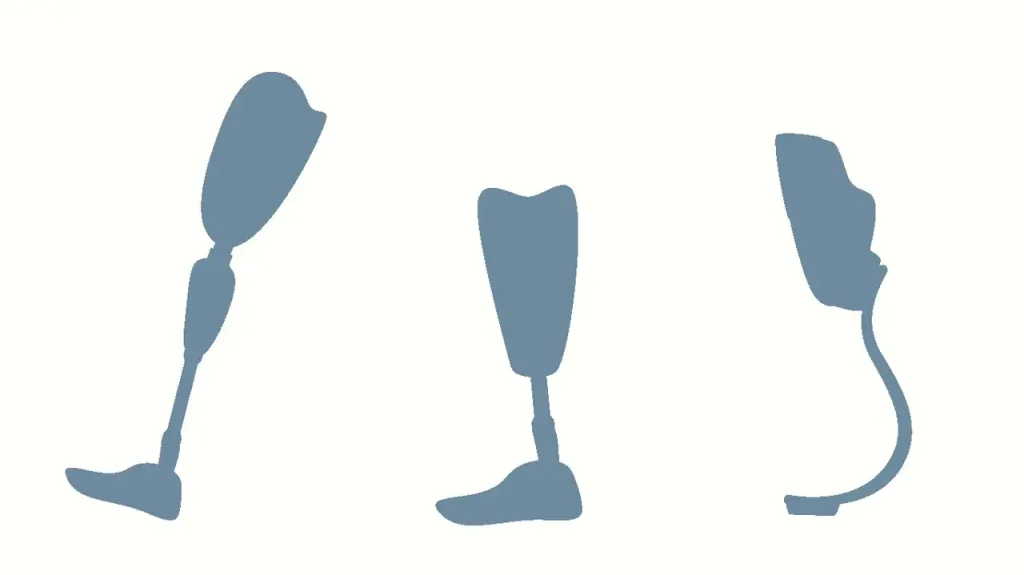
Leg prostheses differ greatly depending on the amputation level—they can range from the forefoot to the hip. The intended use also significantly determines the design and the components used. A distinction is mainly made between everyday, sports, and bathing prostheses.

Interim and Test Prostheses

Directly after the amputation, an interim prosthesis (initial fitting) is used as a temporary solution. Subsequent fittings used to test components or socket shapes are called test prostheses. These are important because the amputated limb must adapt to the new load, especially in the initial phase, and its volume often changes (volume fluctuations). The user’s activity level also develops during this time.

Interim sockets usually consist of thermoplastic materials that can be easily modified and adjusted. This phase is important for testing various components (e.g., knee joints or feet) before the final (definitive) prosthesis is made. At Prothesen-Manufaktur-Da Vinci GmbH, we accompany you intensively during this test phase.

Definitive Prostheses

The sockets for the definitive fitting are usually made of durable casting resins combined with fiber composites (e.g., carbon). These materials are lightweight yet robust enough to withstand the stresses of everyday life or special activities.

The external appearance can be individually designed using cosmetic covers—whether unobtrusively modeled on the body shape or as a conscious design element, we cater to your personal preferences here.

Classification of Prostheses by Function / Usage

© ÖSSUR

Everyday Prostheses

These prostheses are designed for daily use and are tailored to the user’s requirements and activity level.

Functionality for everyday life is ensured by combining mechanical and/or electronic components from various manufacturers. For specific activities (e.g., at work), special work prostheses may also be useful as a supplement.

Sports Prostheses

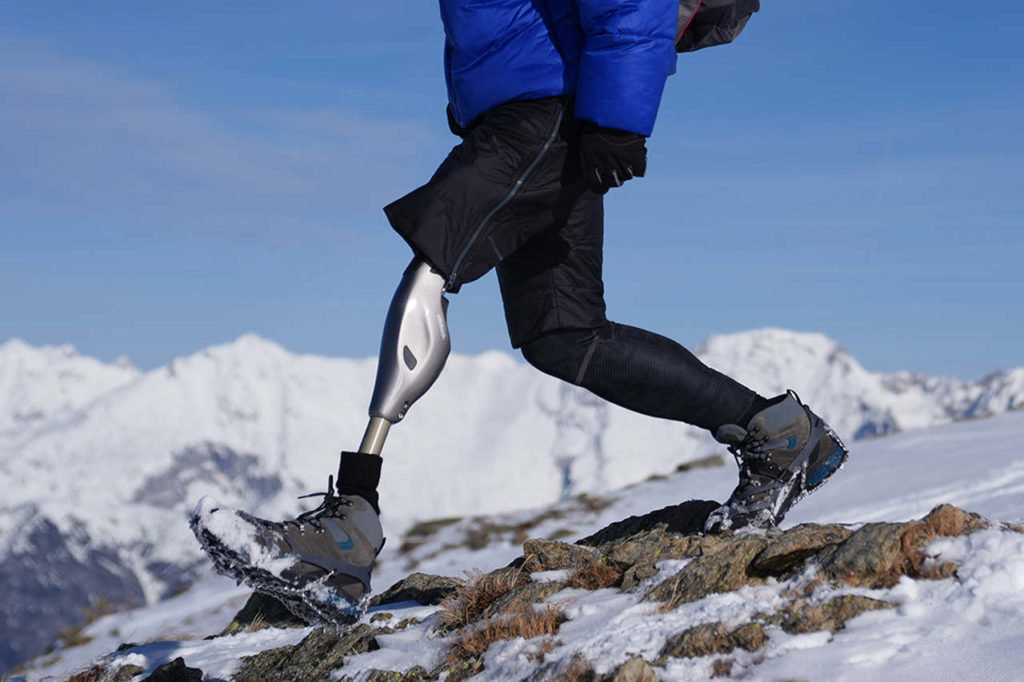
Whether running, hiking, or cycling: Specially constructed sports prostheses are designed for high loads and specific movement sequences.

They enable wearers to pursue hobbies, club sports, or even competitive sports.

Waterproof Walking Aids / Bathing Prostheses

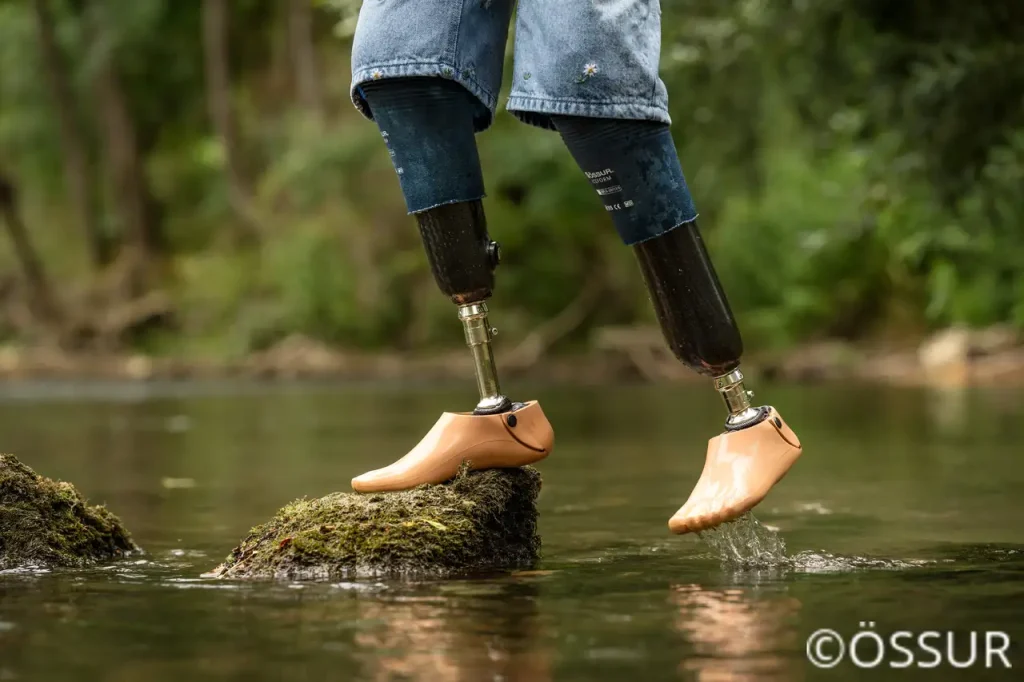
Most everyday prostheses are not designed for prolonged contact with water. For safe movement in wet areas, such as the shower, swimming pool, or on the beach, there are separate, waterproof constructions (bathing prostheses).

© ÖSSUR

Pediatric Fittings

Prostheses for children must meet special requirements. They must be adjustable to constant growth and robust enough for play and movement. A child-friendly design is also taken into account.

Cosmetic Restoration

Sometimes the focus is not on function, but on restoring the external appearance.

Purely cosmetic solutions serve this purpose. They usually have no joint functions but can be very important for body image and well-being.

Do You Have Questions?

We are happy to provide a personal consultation!

Do you have any unanswered questions, or would you like an assessment of your current fitting situation? No matter whether you are about to receive your first prosthesis or already have many years of experience as a user—we take the time to discuss your concerns in detail.

You are welcome to schedule an appointment for a personal consultation at our facility, or contact us in advance by phone. Together, we will clarify what concrete possibilities modern orthopedic technology offers for your individual needs.

FAQs

Leg prostheses replace missing sections of the leg. The connection to the body is established by the prosthetic socket, which encases the amputated limb. Additional components (e.g., knee joints, foot parts, modular parts) are attached to this socket.

There is a multitude of components available that support movement either purely mechanically or via microprocessor control (electronically). This structure made of individual parts is referred to as modular design.
Cost coverage for a prosthetic fitting is usually applied for at the responsible funding body (e.g., statutory or private health insurance, accident insurance). The application is reviewed individually there. If there is a valid claim for treatment, the costs are generally covered. We support you throughout the application process.
The cost of a leg prosthesis depends significantly on the components used, the type of fitting, and the intended use (e.g., everyday life, sports, waterproof version). Due to the wide selection of functional parts, prices can vary considerably.
This question cannot be answered with a blanket statement, because a prosthesis is always a highly individual assistive device. It can be compared to shoes: There are different models that feel comfortable in different ways depending on the person. Ultimately, which prosthesis is most beneficial for you depends on your physical conditions, your daily life, and your personal goals.

Contact Form